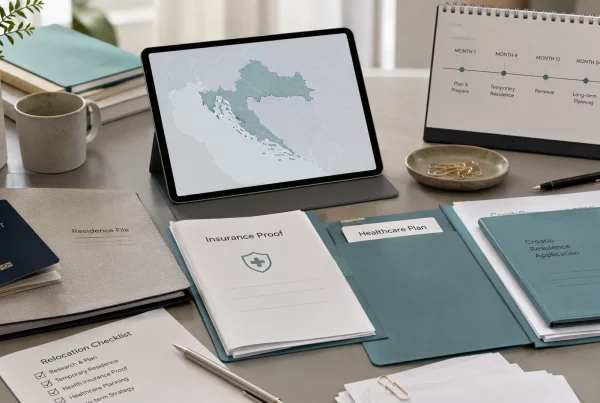

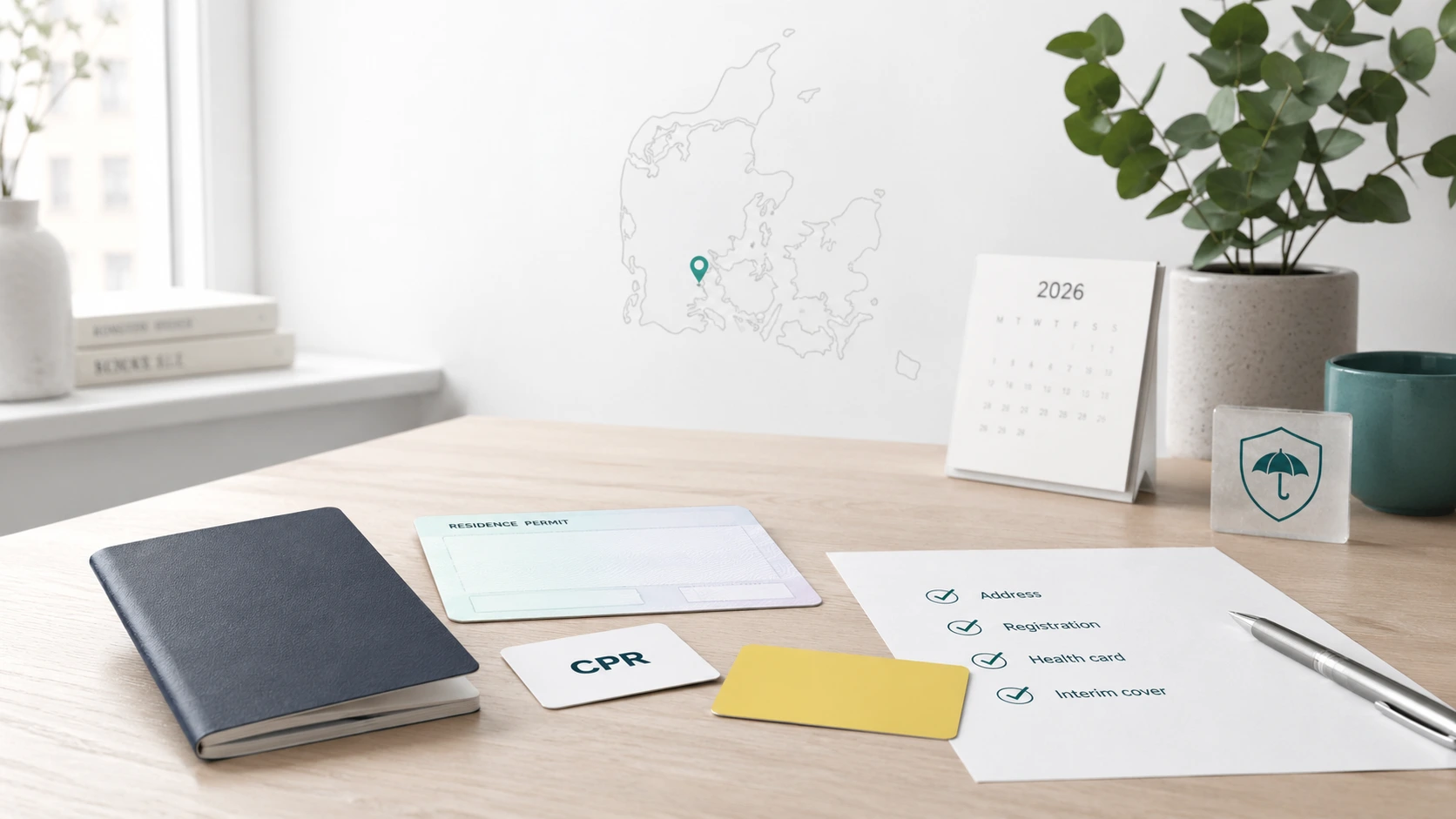

If you are a US citizen planning to move to Denmark, your health insurance planning should follow your residence route, not the other way round. Denmark has a public healthcare system for residents, but Danish healthcare access depends on having the right immigration status, completing address registration, obtaining CPR registration and arranging your health insurance card. This guide explains how to approach US citizens moving to Denmark health insurance: what to check before you leave, what happens after you arrive, where private health insurance Denmark may fit, and when expat cover Denmark or IPMI Denmark may still be relevant.
- Visa-free entry is not relocation: US citizens may enter Denmark for short stays of up to 90 days for tourism, but longer stays require the correct residence permit route.[1][2]
- Healthcare access follows registration: Danish public healthcare access is linked to residence, CPR registration and obtaining a Danish health insurance card.[3][4]
- There may be a cover gap: before registration is complete, non-residents are generally limited to free emergency hospital care in acute situations; interim cover should be planned carefully.[5]
- CPR registration is practical, not automatic: you will usually need an address, relevant permit documents and local municipal registration. Municipality timings can vary.[3]
- Public healthcare may not remove every insurance need: private health insurance Denmark or IPMI Denmark may still be relevant for private care, overseas treatment, repatriation or employer mobility needs.[6][7]
- Employer benefits need review: a Danish employer may help with relocation and may offer group cover, but you should verify what applies to you and your family.[8][9]
- Build a 3–10 year plan: your first 90 days, first year and longer-term residence plans may each require different insurance decisions.
Executive brief
Moving from the United States to Denmark is not only a question of choosing a health insurance policy. It is a sequence: immigration route, housing, local registration, CPR number, health insurance card, GP selection, and then any private or international cover you may want around the public system.
For a short exploratory visit, a US citizen may be able to enter Denmark without a visa for up to 90 days, subject to Schengen rules and entry conditions.[1] That is not the same as a right to live, work or settle in Denmark. If you plan to stay longer, Denmark’s official immigration portal states that you must apply for a residence permit.[2]
Health cover planning should be built around this distinction. During the exploratory or pre-registration stage, you may need travel insurance, temporary expat cover Denmark, or an international private medical insurance policy. Once you are registered as a resident and have a CPR number and health insurance card, the Danish public healthcare system becomes central to your day-to-day care.
The key compliance point is to avoid making assumptions. Do not assume that an employer, university or family route gives you immediate public healthcare access on arrival. Do not assume that a private insurer’s global network means every Danish provider will bill the insurer directly. Do not assume that a local health card removes the need for cover outside Denmark, especially if you still travel to the United States.
Confirm your route, application steps, expected timings, interim insurance and whether any family members need separate documentation.
Secure your address, register with the municipality, obtain CPR registration and arrange your health insurance card and GP.
Decide whether Danish public healthcare alone is sufficient, or whether private health insurance Denmark / IPMI Denmark is useful for private access, travel, dependants or US exposure.
Are you visiting Denmark for under 90 days?
  ↓
  Yes → Check Schengen entry rules and arrange travel medical cover for the visit.
  No  → Identify your residence route before relying on Danish public healthcare.

Do you already have a Danish residence permit route?
  ↓
  Yes → Plan address registration, CPR registration and health insurance card steps.
  No  → Verify your route with official Danish immigration sources before planning long-term cover.

Have you completed CPR registration and received / ordered your health insurance card?
  ↓
  Yes → Public Danish healthcare becomes the base layer for care in Denmark.
  No  → Consider interim travel or expat cover Denmark until public access is active.

Will you need private care, international treatment, US trips or repatriation cover?
  ↓
  Yes → Compare private health insurance Denmark and IPMI Denmark.
  No  → Public care may be the main layer, but verify exclusions, dental, prescriptions and overseas needs.
Route overview
For US citizens, the starting point is simple but important: a short stay and residence are different categories.
The US State Department states that US citizens may enter Denmark for up to 90 days for tourism without a visa, subject to the applicable rules.[1] Denmark’s official immigration portal also explains that a visa normally grants the right to stay in the Schengen region for up to 90 days, and that a longer stay requires a residence permit.[2]
In practical terms, your residence route determines the documents you need, when you can register locally, and when Danish healthcare access becomes realistic.
Common route categories to verify
| Route | What it may involve | Health insurance planning point |
|---|---|---|
| Work | A Danish job offer and a relevant work / residence permit route, such as a scheme listed by Danish immigration authorities. | Ask whether you can register promptly after arrival, and whether your employer provides private or international cover before CPR registration is complete. |
| Positive List / skilled work | Denmark’s official immigration site describes the Positive List as covering professions experiencing a shortage of qualified professionals, with additional conditions.[10] | Check current occupation, salary, employment and processing requirements directly with official sources before making insurance assumptions. |
| Study | Non-EU/EEA students planning to stay for more than three months generally need a residence permit and civil registration.[5] | Verify any insurance expectations for the application and plan cover until CPR registration and the health card are in place. |
| Family reunification | Denmark’s immigration portal states that a spouse or partner living in Denmark may make you eligible to apply under family reunification rules.[11] | Verify whether your specific approval and address situation allow immediate CPR registration, and whether dependants need interim cover. |
| Entrepreneur / other route | Route-specific conditions can vary and may change. | Use official immigration sources and move unclear insurance or public-access questions into “Points to verify”. |
The first 90 days: do not confuse entry with residence
A 90-day short stay may be useful for viewing housing, meeting an employer, visiting family or preparing documents. It should not be treated as a full relocation plan. You may not yet have Danish public healthcare access. You may not yet have CPR registration. You may not yet have a Danish GP.
This is where temporary cover can matter. For a US citizen, US domestic health insurance may not be designed for routine treatment in Denmark. Medicare generally does not operate as a Danish health cover solution. You should therefore check the geographical scope of any existing US policy and arrange travel medical cover or short-term expat cover Denmark where needed.
The first year: registration and settling into the system
After your residence route is approved and you have a Danish address, the core task becomes registration. Life in Denmark states that if you intend to stay for three months or more, you must notify the Civil Registration Office, and the CPR number is essential for contact with Danish authorities, tax and social security matters.[3]
This is also when you should check your health insurance card process. Life in Denmark explains that if you work legally in Denmark, you are covered by the Danish health insurance system, but you need to register and get a health insurance card.[4]
Years 3–10: your insurance strategy changes
Your long-term needs may look different once you have Danish public healthcare access. If you remain mostly in Denmark, use the public system and do not need private hospital access, your insurance needs may narrow. If your life remains international, your needs may expand.
You may want IPMI Denmark if you expect:
- regular travel outside Denmark;
- continued treatment or second opinions outside Denmark;
- time in the United States;
- international dependants or children in more than one country;
- private hospital access or direct billing outside the public system;
- emergency evacuation or repatriation benefits, where available under the policy.
A 3–10 year strategy is not about buying the largest policy. It is about checking what Danish public healthcare does for you, what it does not do, and which private layer is proportionate.
What to verify for public access
Danish healthcare access is connected to registration. The central concept is CPR registration.
The CPR number is a Danish civil registration number. Life in Denmark describes it as essential for contact with Danish authorities and especially for tax and social security matters.[3] In practice, it also underpins access to Danish public healthcare services.
CPR registration: what to check
Life in Denmark explains that you cannot apply for a CPR number before you have found a place to live and actually live there. It also notes that the minimum residence period needed for a permanent address varies by municipality and is usually 1 to 3 months.[3]
This point matters for health insurance. If your municipality’s timing or your housing situation delays CPR registration, your public-system access may not be fully active when you expected it to be. You should plan for the possibility of a temporary cover period.
- Confirm that your residence route allows you to register in Denmark.
- Secure a Danish address and check whether it is accepted for registration.
- Check your local municipality’s appointment process.
- Bring your passport or identity document.
- Bring your residence and work permit, where relevant.
- Bring proof of address, such as a rental contract, where required.
- Ask when your CPR number will be active for healthcare purposes.
- Ask how and when your health insurance card will be issued.
Health insurance card
After registration, you should arrange your Danish health insurance card, often called the yellow health card or sygesikringskort. Life in Denmark explains that if you work legally in Denmark, you are covered by the Danish health insurance system, but you need to register and get a health insurance card.[4]
Life in Denmark also states that you can order the card online if you have MitID, or book an appointment at the Citizen Service centre where you live.[4] Timing and local practice should be verified with the municipality.
What public healthcare may cover
Official Danish study guidance describes the Danish healthcare system as offering equal and universal access for all residents.[5] Once you are registered and covered, standard public healthcare typically becomes the base layer for GP and hospital care in Denmark.
You should still check what sits outside, or partly outside, the public system. Dental treatment, physiotherapy, optical care, prescriptions, elective private treatment and treatment outside Denmark may not work in the same way as public GP or hospital services. If these areas matter to you, they should form part of your private health insurance Denmark review.
Emergency care before registration
Official student guidance states that non-residents staying in Denmark are entitled to emergency hospital care free of charge in the event of an accident, childbirth, acute illness or sudden aggravation of a chronic disease.[5]
That should not be treated as full public health insurance. Emergency-only access is not the same as GP registration, routine outpatient care, chronic condition management, private treatment or international evacuation. If you arrive before your public access is active, plan for the gap.
Before you rely on public care, verify three things in writing or through official portals: your residence status, your CPR registration position, and your health insurance card / GP registration process. If any of those are uncertain, keep interim cover in place until the position is clear.
Private vs IPMI
Once you understand your public-access position, the next question is whether you need private health insurance Denmark, IPMI Denmark, or neither.
These terms are often used casually, but they do not mean the same thing.
| Type of cover | Typical purpose | Questions to ask |
|---|---|---|
| Danish public healthcare | Base healthcare access for registered residents in Denmark. | Am I registered? Do I have CPR? Do I have a health card and GP? |
| Local private / supplementary cover | May support private treatment, faster access, dental, physiotherapy or other supplementary needs, depending on the product. | Does it only work in Denmark? Does it cover the services I actually use? |
| IPMI / international private medical insurance | Designed for internationally mobile people who may need treatment across countries, private networks, evacuation or global claims support. | Does it include Denmark, the US, repatriation, outpatient care, direct billing and dependants? |
| Travel insurance | Short-term trip protection, often for emergency or unexpected events. | Is it enough for relocation, chronic conditions or long stays? Often, it is not. |
When public healthcare may be enough
Public healthcare may be sufficient if your life is mainly in Denmark, you are registered, you are comfortable using the public system, and you do not need significant private or cross-border care.
Even then, you should check dental, optical, physiotherapy, prescriptions, mental health pathways and any chronic care needs. The issue is not whether Danish public healthcare is strong. The issue is whether it matches your personal risk profile and mobility pattern.
When private health insurance Denmark may be useful
Private cover may be useful if you want a private pathway alongside public care. This might relate to private hospital treatment, shorter waits for certain services, broader outpatient options, dental or additional therapies. The exact value depends on the policy wording, exclusions, waiting periods and whether your preferred providers are included.
Do not assume that a private policy replaces public registration. For a US citizen moving to Denmark, public access and private cover should usually be reviewed as separate layers.
When IPMI Denmark may be useful
IPMI is typically the broader international layer. Official insurer resources describe several features that can be relevant for internationally mobile people. Bupa Global describes health cover that travels with you, with treatment within plan limits covered at home and abroad.[7] Now Health International notes that even where a country allows access to a public healthcare system, it can still be worth supplementing your cover with private health insurance, especially where waiting or navigating treatment in an unfamiliar place creates stress.[6]
AXA Global Healthcare describes access to private healthcare anywhere in the world under its cover levels, including access to its AXA Select network, where treatment costs can be paid directly for you.[12] Cigna Healthcare describes a global network of over 2 million hospitals and healthcare providers and refers to reimbursement within 5 working days, subject to its terms and process.[13]
These are insurer descriptions, not recommendations of any one provider. The practical takeaway is that IPMI may be most relevant when your risk is international: frequent travel, US exposure, cross-border family needs, private networks, repatriation or employer mobility.
US exposure is the expensive variable
For US citizens, one of the largest pricing and cover questions is whether the United States is included. Some international plans allow you to include, limit or exclude US cover. AXA Global Healthcare states that it may be possible to exclude the USA from the area of cover, which can reduce premiums, while some plans may still cover emergencies there.[12]
If you return to the United States regularly, have US-based family, or want treatment access there, do not treat this as an afterthought. Ask specifically about US cover, emergency-only provisions, planned treatment, networks, pre-authorisation and claim currency.
How to think about cover over 3–10 years
Focus on interim cover, emergency access, residence status and the gap before CPR registration and health card arrangements are complete.
Review GP access, prescriptions, dependants, dental, private care preferences and any US trips already planned.
Decide whether public care plus travel insurance is enough, or whether IPMI remains useful for mobility and private treatment.
Reassess family, employer, chronic conditions, maternity, US exposure and permanent residence plans as your life becomes more settled.
Employer angle
If your move to Denmark is employment-led, your employer can affect your timing, registration and insurance choices. That does not mean every employer provides the same support.
Life in Denmark states that if you work legally in Denmark, you are covered by the Danish health insurance system, but you need to register and get a health insurance card.[4] This is an important distinction. Employment may place you into the Danish system, but you still need to complete the registration steps.
Some multinational employers also arrange group private medical or international health insurance. APRIL International describes providing international health insurance plans to companies of all sizes to protect staff wherever they are in the world.[9] That is an insurer resource, not a statement that your employer has this benefit. You need to ask.
- Does my relocation package include temporary medical insurance before CPR registration?
- Does the company provide private health insurance Denmark, expat cover Denmark or IPMI Denmark?
- Are my spouse, partner or children included?
- Does the policy include the United States, or is US cover limited or excluded?
- Is cover employer-paid, employee-paid or shared?
- When does cover start: offer date, arrival date, first working day, payroll date or CPR registration date?
- Does the plan include outpatient care, dental, maternity, mental health, evacuation or repatriation?
- Are pre-existing conditions handled differently for group members?
- Which hospitals or clinics can bill directly?
- Who supports claims: HR, insurer, broker or a relocation provider?
- What happens if I leave the company, change assignment or move country?
Employer-paid cover and portability
Employer-provided cover can be valuable, but it may be tied to employment. If you resign, are made redundant, change country or move from an expat assignment to a local contract, the insurance position may change.
For a 3–10 year relocation plan, ask whether the policy is portable. Can you continue it individually? Would medical underwriting apply later? Would dependants remain covered? What happens if you move from Denmark to another country?
Families and dependants
Life in Denmark includes guidance for dependent family members in the context of healthcare when working in Denmark.[4] You should still verify the practical steps for each family member. A spouse or child may have different registration timing, different documentation and different insurance needs during the first weeks.
For employer cover, do not assume dependants are included automatically. Some plans include family members, some charge extra, and some restrict benefits by relationship, age or location.
Network and billing reality
Insurance is not only about whether a benefit appears in a brochure. It is also about how care is accessed and paid for.
Public care in Denmark
When you use the Danish public system as a registered resident, your health card and GP registration are central. You do not normally treat ordinary public GP or hospital care as a private insurance claim. The public system is the main route.
This means that, if you are registered and your care is appropriately within the public system, your private insurer may not be involved at all. The private policy becomes relevant when you choose private treatment, seek care outside Denmark, use benefits not covered by the public system, or need international services.
Private treatment and reimbursement
For private facilities, billing can work differently. Some international insurers have network or direct-settlement arrangements. AXA Global Healthcare states that its AXA Select network can allow treatment costs to be paid directly for you.[12]
That does not mean every clinic in Denmark will bill every insurer directly. You should verify network status before treatment wherever possible. If direct billing is not available, you may need to pay the provider and submit a reimbursement claim.
Claims speed and documents
Insurer resources often describe digital claims and reimbursement timeframes. Cigna Healthcare refers to reimbursement within 5 working days in its global professionals material.[13] AXA Global Healthcare states that over 80% of eligible claims are settled within 48 hours, as long as it has the information it needs.[12]
Treat those as insurer-stated service information, not a universal guarantee. The practical rule is to keep complete documents: invoice, receipt, diagnosis, treatment date, provider details, referral or pre-authorisation where needed, and your membership information.
Need treatment?
  ↓
Is it public Danish healthcare with your health card?
  ↓
  Yes → Use the public pathway and your GP / hospital access.
  No  → Check whether you want private care or international care.

Is the provider in your insurer's direct-billing network?
  ↓
  Yes → Ask insurer/provider to confirm direct settlement before treatment.
  No  → Expect to pay first and claim reimbursement, unless insurer confirms otherwise.

Does treatment need pre-authorisation?
  ↓
  Yes → Obtain approval before planned treatment where required.
  No / unsure → Ask insurer before treatment, especially for higher-cost care.
Pre-authorisation
Many private and international policies require pre-authorisation for inpatient care, surgery, high-cost scans, maternity, oncology or planned procedures. This is policy-specific. Do not assume that a valid policy means all private care will be reimbursed automatically.
Before planned private treatment, ask:
- Is this condition covered?
- Is this provider recognised?
- Is pre-authorisation required?
- Can the provider bill the insurer directly?
- What excess, deductible, co-payment or limit applies?
- Will reimbursement be paid in DKK, USD, EUR or another currency?
US return trips
US citizens often continue to travel to the United States for family, work or personal reasons. This is where a Denmark-only view of health insurance can be too narrow.
If your IPMI excludes the US, check whether emergency US cover remains. If it includes the US, check how that affects the premium and network access. If you rely only on Danish public healthcare, check what protection you have during trips outside Denmark.
Checklists, FAQ, sources
Pre-move checklist
- Confirm whether your stay is under 90 days or a residence move.
- Identify the correct residence permit route using official Danish immigration sources.
- Check processing times, required documents and whether dependants apply with you or separately.
- Arrange insurance for the period before CPR registration and public healthcare access.
- Check whether your US policy covers Denmark and whether any cover is emergency-only.
- Ask your employer, university or sponsor what medical support is included.
- Prepare proof of address for municipal registration.
- Bring medical records, prescriptions and vaccination documents where relevant.
- Check medication import rules and prescription continuity through official health sources.
- Decide whether you need IPMI Denmark for US travel, private care or international mobility.
Arrival checklist
- Move into an address that can be used for registration.
- Book or attend the relevant municipal / Citizen Service appointment.
- Complete CPR registration when eligible.
- Arrange the health insurance card.
- Select or confirm your GP where required.
- Keep interim cover active until public access is clear.
- Register with your insurer’s app or portal if you hold private cover.
- Save insurer emergency and claims contact details.
- Ask how direct billing works in Denmark under your plan.
- Keep copies of all registration and insurance documents.
Annual review checklist
- Has your residence status or renewal timing changed?
- Have your employer benefits changed?
- Have you added dependants?
- Have you started new medication or treatment?
- Have you used private treatment in Denmark?
- Have you travelled to the US more than expected?
- Has your insurer changed its network, premium or benefits?
- Do you still need US cover within your IPMI policy?
- Would a deductible or excess change make sense?
- Is public care plus travel cover now enough, or is IPMI still useful?
Glossary
A Danish civil registration number used for contact with authorities and practical access to services, including healthcare-related processes.[3]
The process of registering in the Danish Civil Registration System, usually after you have the relevant residence basis and address.
The Danish card used to show public healthcare entitlement and GP information after registration.
Your practical ability to use Denmark’s public healthcare system, usually linked to residence, registration and health card status.
Private or supplementary cover used alongside or outside the public system, depending on the policy.
International private medical insurance arranged for an internationally mobile person living in Denmark, often with cross-border benefits.
A payment arrangement where the insurer pays the provider directly, subject to network participation and policy terms.
A claims route where you pay first, submit documents, and receive eligible costs back from the insurer under the policy.
FAQ
Do US citizens need health insurance to move to Denmark?
You should separate immigration requirements from practical healthcare planning. For stays beyond short visits, you need the correct residence route. Once registered as a resident with CPR and a health insurance card, Danish public healthcare becomes the base layer. Before that point, you may need interim travel or expat cover Denmark. Route-specific insurance requirements should be verified with official immigration sources.
Can I use Danish public healthcare immediately after landing?
Not necessarily. Public access depends on registration and your health insurance card process. Non-residents may have access to free emergency hospital care in acute situations, but that is not the same as full public healthcare access.[5]
What is CPR registration?
CPR registration is registration in Denmark’s Civil Registration System. The CPR number is essential for contact with Danish authorities and practical access to services. You usually need a residence basis and a Danish address before you can complete it.[3]
Is IPMI Denmark still useful after I have public healthcare?
It can be, depending on your needs. IPMI may be relevant if you want private care, global treatment access, cover outside Denmark, direct billing networks, emergency evacuation or US-related cover. If your life is mainly in Denmark and you use the public system, your need may be narrower.
Should I include the United States in my international policy?
That depends on how often you return, whether you want planned treatment there, and how much premium impact you can accept. Some international plans offer options to include, limit or exclude US cover. Verify this directly in the policy documents.
Will every Danish private hospital bill my insurer directly?
Not necessarily. Direct billing depends on the insurer, provider, network and treatment authorisation. If direct billing is not confirmed, expect to pay first and claim reimbursement.
Points to verify
The items below should be checked directly against official sources, your municipality, your employer and your insurer before you rely on them.
- Residence route: confirm your exact Danish residence permit category, application steps, fees, processing time and dependant rules.
- Work route conditions: confirm current salary, occupation and bank-account rules for your specific employment permit route.
- Public registration steps and timelines: confirm when your municipality will allow CPR registration, what address proof is acceptable and whether local timing differs.
- Health insurance card timing: confirm how quickly the card or digital access is available after registration.
- Emergency-only period: confirm what care is available before full public registration and what you would need to pay privately.
- Student or family-route insurance evidence: confirm whether your route requires proof of health insurance or financial resources.
- Dependant registration: confirm whether spouses, partners and children register at the same time and what documents they need.
- Private insurance acceptance: do not assume any private policy satisfies any immigration or institutional requirement unless the relevant official body confirms it.
- US cover: confirm whether your IPMI includes, excludes or limits treatment in the United States.
- Direct billing: verify provider participation before planned private treatment.
Book a free consultation with one of our experts
Choose your preferred adviser: Julien (English, French and Spanish) or Sean (English or Italian).
Julien — English, French and Spanish
Sean — English or Italian