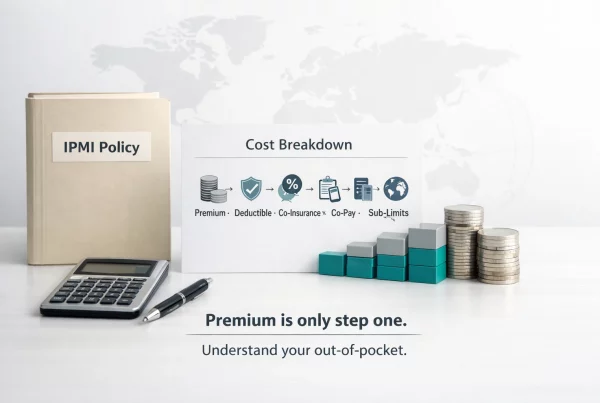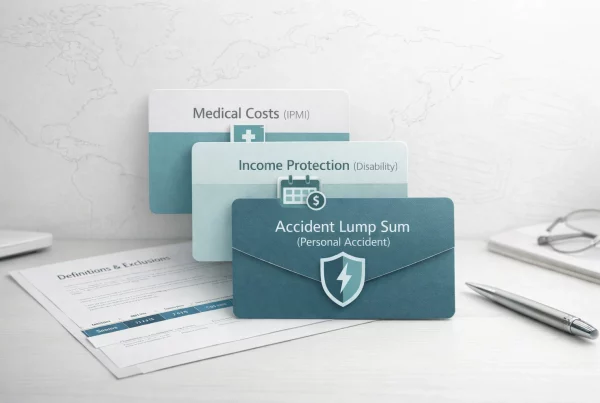




You took out international private medical insurance (IPMI) to protect your health while living abroad — and that includes mental wellbeing. In practice, IPMI mental health coverage can look quite different from one policy to the next: benefits may sit within outpatient cover, be offered as a separate module, or be subject to session caps and pre-authorisation. This guide explains common benefit structures, how to access support across borders (including teletherapy), how confidentiality typically works, and practical, non-clinical ways to maintain wellbeing while you’re overseas.
This is not medical advice — it’s practical preparation to help you access support more quickly if you ever need it.
- Your policy number, insurer/TPA contact details, and membership card saved somewhere accessible.
- Access to the insurer’s portal/app (or downloaded claim and pre-authorisation forms if your insurer uses PDFs).
- Clarity on where mental health benefits sit (outpatient module vs separate mental health category vs add-on).
- Your local emergency number(s) noted down, plus a reputable crisis-directory link (see “When you need urgent help”).
- A privacy plan: where you can take a call or teletherapy session without being overheard.
- Mental health is part of health: the WHO describes mental health as a state of wellbeing that helps you cope with life’s stresses and contribute to your community.[1]
- Expect variation: mental health benefits vary widely by insurer, policy, country, provider network and treatment type — and claims decisions depend on policy terms and insurer/TPA processes.
- Know your benefit structure: therapy, counselling, psychiatric consultations and substance misuse treatment may be treated differently (and sometimes offered as optional), often with caps and pre-authorisation.
- Teletherapy can help — with conditions: insurers may cover telehealth, but eligibility can depend on licensing, location, platform requirements and how the service is billed.[3]
- Confidentiality matters: health data is sensitive and regulated; understand what you may need to share for pre-authorisation and claims, and use secure channels wherever possible.[5]
- Layer your support: IPMI + local primary care + community resources (and, for groups, an EAP) can create a more resilient support set-up.[2]
- Importance of mental health coverage
- Typical IPMI benefits (in-patient, out-patient therapy, counselling sessions)
- Optional add-ons and limitations
- Accessing care abroad (networks, telehealth)
- Combining IPMI with local support
- Using employee assistance programmes for groups
- Tips for maintaining wellbeing while abroad
Importance of mental health coverage
Living abroad can be exciting — and it can be demanding too. New systems, new routines, language barriers, time zones, and distance from familiar support networks can all add pressure. When you’re juggling relocation admin, schooling, work expectations and cultural adjustment, it’s easy to see how stress can build.
Mental health is widely described as part of overall health: the World Health Organization frames it as a state of wellbeing that supports coping with life’s stresses, working and learning well, and contributing to community.[1] From an insurance perspective, this matters because access can be harder abroad — and support often works best when it’s consistent, not just a one-off appointment.
IPMI may help by giving you access to a wider provider network, potentially faster appointments in some locations, and cover that can travel with you. However, mental health benefits are often structured and conditional (for example, session caps, pre-authorisation, provider eligibility rules, or specific benefit categories within the policy).
Think of mental health cover in the same way you think about hospital cover: it’s not only about “if something happens”. It’s about knowing the pathway in advance — so you’re not trying to interpret the policy when you’re already under pressure.
Glossary (plain English, insurance-led)
| Term | What it usually means in practice |
|---|---|
| Counselling | Shorter-term, issue-focused support (for example, adjustment stress, bereavement or relationship strain). Definitions vary by country and professional body, so insurers often set eligibility by provider credentials rather than the word itself. |
| Therapy / psychotherapy | Talking therapies delivered by qualified professionals (scope and terminology differ internationally). In insurance terms, cover often depends on who provides the service and how it is billed. |
| Psychologist vs psychiatrist | A psychiatrist is a medical doctor and can prescribe medication; a psychologist typically provides therapy and assessments and usually cannot prescribe (jurisdiction-dependent).[9] |
| Inpatient vs outpatient | Inpatient = admission to a hospital/facility (often requires pre-authorisation). Outpatient = appointments without admission (often subject to visit/session caps or general outpatient limits). |
| Pre-authorisation | The insurer’s approval in advance for certain treatment (commonly inpatient admissions and higher-cost care) to confirm eligibility, “medical necessity” criteria, and to set up direct settlement/direct billing where available. |
| Teletherapy / telemental health | Mental health support delivered by video, phone or digital platforms (assessment, therapy, and sometimes medication management). Cover can depend on the platform, location and licensing.[3] |
| EAP (Employee Assistance Programme) | An employer-sponsored benefit that typically offers free, confidential short-term counselling, assessment, referrals and follow-up support — and may also include legal/financial support and crisis support, depending on the programme.[10] |
| “Medical necessity” | A clinical and administrative standard used by insurers to assess whether a service is appropriate for a condition and meets policy criteria. Definitions and evidence requirements vary by insurer and plan. |
Note: terminology, licensing and scope of practice vary by jurisdiction. If a definition affects eligibility, treat it as a “point to verify” with your insurer/administrator.
Typical IPMI benefits (in-patient, out-patient therapy, counselling sessions)
In IPMI, mental health benefits are often grouped into three practical areas: inpatient psychiatric care, outpatient consultations and therapy, and support services (which may include wellbeing programmes or digital tools). The key point is that insurers define, limit and administer each area differently — so “covered” doesn’t necessarily mean “unlimited” or “without conditions”.
May apply to hospital or facility admissions where inpatient treatment is clinically required. Often involves pre-authorisation and may be subject to day limits or facility eligibility rules.
May include sessions with a psychologist/therapist, counselling abroad, and follow-up appointments. Often limited by sessions/visits per policy year, eligible provider types, and/or annual benefit limits.
Often treated as a specialist outpatient benefit. It may include assessments and medication management. Prescription cover is frequently assessed separately under outpatient pharmacy rules.
Table: benefit types and typical sub-limit patterns (common market patterns)
This table sets out common market patterns (it is not insurer-specific). We do not include figures because limits vary widely. Always check your benefit schedule and policy definitions.
| Benefit type | What it can include (examples) | Typical sub-limit patterns / conditions (non-numeric) |
|---|---|---|
| Inpatient psychiatric treatment | Hospital admission, facility stay, inpatient therapies delivered during admission, inpatient medication. | May require pre-authorisation; may be limited to certain facility types; may be subject to day caps; may require clinical notes and a discharge summary; emergency admissions may require prompt notification. |
| Outpatient psychotherapy / psychology | Therapy sessions with a psychologist/therapist; structured outpatient programmes. | May be subject to session caps; may sit within general outpatient limits; may require referral; provider credential rules are common; “medical necessity” evidence may be requested. |
| Counselling sessions | Short-term counselling support, adjustment issues, workplace stress support. | May be included under outpatient or a wellbeing benefit; may have session caps; may require the provider to be licensed/recognised; may exclude coaching or non-clinical services if billed as “counselling”. |
| Psychiatry (consultations) | Specialist assessments, follow-ups, medication management. | Often treated as specialist outpatient; may require referral; may have visit caps; may require pre-authorisation for complex treatment plans; documentation requirements may be higher than for routine GP appointments. |
| Prescriptions related to mental health | Medication prescribed by a licensed clinician (including a psychiatrist where permitted). | Typically governed by outpatient pharmacy rules (for example, formulary, prior approval, dispensing limits, and country-specific availability). Some controlled medicines may have additional restrictions. |
| Substance misuse treatment | Structured programmes, detox-related medical care, rehabilitation services (where covered). | May be excluded or restricted; may require pre-authorisation; may be limited to medically supervised settings; waiting periods or exclusions can apply. Definitions and eligibility criteria vary widely.[12] |
| Teletherapy / telemental health | Video/phone therapy sessions; virtual consultations; digital follow-ups. | May require approved platforms; patient/provider location and licensing can be relevant; may count towards the same caps as in-person care; may be assessed differently depending on billing codes and local rules.[3] |
| Wellbeing programmes / preventive care | Screenings, digital wellbeing tools, coaching, mindfulness resources, lifestyle programmes. | Often offered as value-added services rather than insured benefits; may not require claims; eligibility can depend on plan tier or region; may not be a substitute for clinical treatment. |
If you’re unsure how a service is categorised — for example, whether teletherapy is treated as “outpatient psychotherapy” or a “virtual GP” consultation — treat it as a key check. It can affect whether pre-authorisation is required and what supporting documentation is needed for a claim.
Optional add-ons and limitations
Some IPMI policies include mental health benefits as standard, while others offer them as optional modules or enhanced tiers. Even where benefits exist, the practical limitations are often in the detail: definitions, provider eligibility, caps, pre-authorisation and exclusions.
May increase therapy/counselling availability, broaden eligible provider types, or provide a separate mental health allowance rather than using the main outpatient limit.
May add teletherapy options, second-opinion services, or app-based support. Rules around licensing, location and platform requirements are still common.
Inpatient admissions and higher-cost treatment often require approval in advance. Some outpatient mental health treatment may also trigger pre-authorisation.
What “limitations” often mean in practice
- Provider definitions: licensed psychologist vs counsellor vs therapist; psychiatrist vs GP; supervised trainees; recognised clinics vs independent practitioners.
- Benefit categorisation: “outpatient”, “specialist”, “psychiatric”, “rehabilitation”, or “wellbeing programme”.
- Caps and sub-limits: session/visit caps, annual limits, combined limits across provider types, or limits that reset at renewal.
- Pre-existing condition rules and waiting periods: policy-specific and often sensitive for mental health (review underwriting terms and any exclusions carefully).
- Programme exclusions: some structured programmes, residential care types, or non-medical coaching services may be treated differently from clinical therapy.
- Evidence requirements: some claims require more detailed supporting information to demonstrate eligibility and “medical necessity”, depending on the benefit type and insurer process.
- Scope of cover: Which mental health benefits are included (inpatient, outpatient therapy, psychiatric consultations, prescriptions, substance misuse treatment, wellbeing programmes)?
- Eligibility: Is the benefit standard or optional? Are there any waiting periods, underwriting restrictions, or pre-existing condition clauses that may apply?
- Where the benefit sits: Is therapy under outpatient, a separate mental health section, or a sub-limit within outpatient?
- Pre-authorisation: What triggers approval requirements (inpatient admissions, certain provider types, certain programme types, cost thresholds)? What’s the process and typical evidence needed?
- Network access: Are mental health providers included in the network directory? Is direct settlement/direct billing available, and in which countries/cities?
- Teletherapy rules: Is teletherapy covered? Does it depend on where you are located, the provider’s licensing, or the platform used? How is it billed, and does it count towards any session caps?
- Psychiatry and prescriptions: Are psychiatric consultations covered as specialist outpatient? How does prescription cover work (formulary, prior approval, controlled medicines, country restrictions)?
- Confidentiality and data handling: What information is needed for pre-authorisation/claims? Who can access it (insurer vs TPA)? What secure upload options are available?
- Claims documentation: What invoices, receipts, clinical summaries or referral letters are typically required? Are translations ever requested?
- Exclusions: Are there exclusions for specific therapies, programme types, residential treatment, or non-clinical wellbeing services?
If you’re an existing client and want help understanding your benefit schedule, we can support you as your broker — but eligibility and claims decisions sit with the insurer/TPA under the policy terms.
Accessing care abroad (networks, telehealth)
When you’re abroad, “access” can be the biggest hurdle: finding a provider you’re comfortable with, understanding licensing differences, navigating network rules, and arranging payment. The aim is to keep the pathway simple and repeatable — so you can focus on getting support, not paperwork.
Practical walkthrough: how to access care abroad
- Start with your benefit schedule: confirm where mental health benefits sit (outpatient vs separate category vs add-on) and whether pre-authorisation may apply.
- Use the network directory: search for psychologists, psychiatrists and clinics in your city/region; shortlist based on language and availability.
- Confirm network status in writing: directories can be out of date. Ask the insurer/TPA to confirm (or obtain written confirmation from the provider and ask the insurer/TPA to validate it).
- Check pre-authorisation requirements: if approval is required, submit the insurer’s form with the supporting documents they request (often a referral letter or clinical summary).
- Confirm the settlement route: direct settlement/direct billing (where available) vs pay-and-claim reimbursement. Ask what the provider needs to arrange settlement.
- Keep clear documentation: itemised invoices, receipts, proof of payment (if you paid), appointment confirmations for teletherapy, and any required clinical summaries.
- Submit claims via official channels: a portal/app is often easiest to track. Keep the submission confirmation and any claim reference number.
- If you go out-of-network: where possible, request an estimate first; ask how “reasonable and customary” limits are applied; retain detailed invoices and proof of payment.
Many insurers have extensive hospital networks but a smaller panel of mental health providers in some locations. If the directory is limited, ask the insurer/TPA for help finding an eligible provider, and confirm how out-of-network reimbursement would be assessed.
Insurers often need dates of service, provider credentials and a clear breakdown of charges. If the invoice is brief, you may be asked for additional supporting documents.
Even where direct settlement exists, it may depend on pre-authorisation or a guarantee-of-payment process. For outpatient sessions, reimbursement can still be the default in some countries.
Telehealth / teletherapy: what to know (without assuming cover)
Telemental health can include assessments, therapy sessions and follow-ups, and may help where local availability is limited or where you need language-matched support. The National Institute of Mental Health describes telemental health as the virtual delivery of mental health services and highlights practical steps such as confirming insurance cover (as policies vary), choosing secure platforms, and selecting providers who are a good fit for your needs.[3]
- Check eligibility: confirm whether teletherapy is reimbursable under your policy and how it is billed (including whether it counts towards any session caps).[3]
- Location and licensing: eligibility can depend on where you are physically located during sessions and whether the provider is licensed to treat patients in that jurisdiction.
- Platform requirements: insurers may require approved platforms or specific documentation; NIMH also notes the importance of a secure platform that protects privacy and verifies identity.[3]
- Privacy in practice: consider whether you have a confidential space for sessions; headphones and a private room can help.
- Prescriptions: where medication management is involved, rules often depend on local law, controlled-medicine regulations and local pharmacy dispensing practices.
Confidentiality and data handling (high-level, practical)
Mental health records and claims information are sensitive. In the UK, the ICO notes that health information is “special category” personal data and requires additional protections; organisations must identify a lawful basis and meet further conditions for processing under UK GDPR.[7] The ICO also emphasises the lawfulness, fairness and transparency principle: personal data should be processed lawfully, fairly and transparently.[6]
In a US context, HHS explains that the HIPAA Privacy Rule aims to protect health information while allowing information flows needed to provide and promote high-quality care.[8] Across jurisdictions, the practical takeaway is similar: use official channels, share what is necessary for the purpose, and understand who will receive what.
For pre-authorisation and claims, insurers/TPAs commonly request invoices, dates of service, provider credentials, and a clinical summary supporting “medical necessity” (particularly for inpatient admissions or higher-cost care).
Ask what the minimum documentation is. Where appropriate, provide summaries rather than full session notes, and avoid sending sensitive documents over unsecured email or public Wi-Fi.
Use insurer portals/apps and secure upload links where available. If email is required, ask whether encrypted email or a secure upload portal is available. Keep copies of what you send, plus dates and reference numbers.
When you need urgent help
If you or someone else may be at risk of harm, contact local emergency services immediately and seek urgent professional help. Insurance pathways are not designed for crisis situations.
If you’re in the United States, NIMH advises using emergency services (911) in life-threatening situations and refers to the 988 Suicide & Crisis Lifeline for urgent support.[4] If you’re outside the US, use your country’s emergency number and look up reputable local crisis resources via established directories and national health authorities (see below).[13]
The International Association for Suicide Prevention provides a route to country-specific crisis resources (and notes it is not itself a crisis centre).[13]
Befrienders provides a country-based directory to locate emotional support helplines internationally.[14]
IASP references Find A Helpline as a directory partner for locating country-specific resources.[13]
We don’t list country helpline numbers here because details can vary and change. Use official sources and reputable directories, and save your local emergency number(s) in advance.
Combining IPMI with local support
IPMI can be a strong foundation, but it rarely replaces local systems and community support. In many places, the most practical route to ongoing support is a mix of local primary care, local mental health services (public or private), community resources and — where appropriate — teletherapy.
The WHO notes that strengthening mental health systems is best achieved through community-based mental health care, described as more accessible and acceptable than institutional care and associated with improved recovery outcomes.[2] For internationally mobile families, a sensible approach is often to build local connections where you live, and use IPMI to widen options and manage financial exposure.
How “layered support” can work in practice
In many countries, a local GP or family doctor can help with referrals, continuity of records and navigating the system. Some insurers also require a GP referral for specialist outpatient benefits.
If your IPMI network is limited, you may still be able to use local providers and then claim back, subject to your policy terms. Where public systems are accessible, they may also provide longer-term pathways.
Teletherapy may support continuity during travel, relocations, or where local language-matched care is scarce. Check cover and licensing constraints in advance.[3]
Practical coordination tips (non-clinical)
- Keep a personal health file: a private folder with key documents (referrals, summaries, medication lists) can reduce repetition across systems.
- Know what can be shared: clinics and insurers may need signed consent before they can share information; requirements differ by country and provider.
- Expect invoice differences: some systems issue itemised invoices; others do not. Ask the provider for the level of detail your insurer typically requires.
- Use secure channels: for health information, prefer secure portals and avoid sending sensitive documents over unsecured connections.[6]
If you move countries or change regions, re-check provider networks and telehealth rules. What works in one country may not apply in the next.
Using employee assistance programmes for groups
This section is for employers and members of group schemes who have access to an Employee Assistance Programme (EAP). Even where your IPMI benefits are strong, an EAP can play a valuable complementary role: quicker access, short-term support and practical signposting — often without claims paperwork.
The US Office of Personnel Management defines an EAP as a voluntary, work-based programme offering free and confidential assessments, short-term counselling, referrals and follow-up services for personal and/or work-related issues that may affect wellbeing.[10] OPM also describes EAP counselling services as providing access to licensed clinicians/counsellors 24/7 and offering referrals for longer-term support.[11]
Time-limited sessions, confidential assessment, and support for common life and work stressors. The aim is usually early support and signposting, rather than replacing longer-term clinical care.[10]
Referrals to local providers, plus wellbeing resources and sometimes legal/financial guidance, depending on the programme design.[11]
Many EAP models include crisis intervention and support following traumatic events, as well as manager guidance.[10]
How EAP and IPMI can work together (without blurring roles)
- EAP for quicker access: employees can get initial support and signposting quickly, which can be helpful while waiting for appointments or authorisations.
- IPMI for insured treatment pathways: if longer-term therapy, specialist care or inpatient treatment is needed, IPMI benefits may apply (subject to policy terms and eligibility).
- Clear handovers: a good set-up clarifies when someone moves from EAP support to insured treatment, and what (if any) documentation is needed for claims.
Confidentiality in group settings (high level)
Confidentiality standards vary by country and provider, but EAP counselling is designed to be private. Employers typically receive utilisation reporting in aggregate (for programme oversight), rather than identifiable clinical information. Any exceptions (for example, immediate safety concerns or legal obligations) are governed by local law and provider policies.
- Confidentiality statement: what data is shared with the employer (aggregate vs identifiable) and what exceptions apply.
- Access model: 24/7 availability, multilingual support, and how employees access the service (phone, app, web).
- Scope: counselling, referrals, manager consultation, crisis response, and wellbeing content.[10]
- International availability: whether the EAP supports employees abroad (and in which countries/languages).
- Referral pathways: how referrals into IPMI networks work, and whether employees can choose providers.
If you’re arranging cover for a group, you can explore options and support on our Businesses & Groups page: https://big-brokers-health.com/businesses-groups/
Tips for maintaining wellbeing while abroad
This section is intentionally non-clinical. It focuses on everyday habits and planning choices that may support wellbeing while you live internationally — without diagnosing, treating, or recommending specific therapies.
Relocation can disrupt routines. Simple anchors — consistent sleep and wake times, regular meals, and steady movement — can help create a sense of stability during change.
Plan time with friends and family across time zones, and join local communities (sport, volunteering, school networks, language groups) early, rather than waiting until you feel isolated.
Living abroad can be socially and mentally demanding. Build in quiet time, boundaries around work hours, and spaces where you can reset — particularly in the first few months.
Practical, insurance-aware habits
- Know your support routes: save your insurer’s assistance contact details, understand how teletherapy would work if permitted, and keep a reputable crisis-directory link handy.[13]
- Plan for language: if you prefer support in a specific language, check provider directories early and consider teletherapy as a back-up (subject to policy rules).[3]
- Protect privacy: for teletherapy, identify a confidential space and avoid shared devices for sensitive communications where possible.
- Reduce admin load: keep a folder with your policy documents, pre-authorisation forms and claims instructions. A little organisation up front can reduce friction later.
- Use wellbeing programmes sensibly: if your insurer includes wellbeing tools, treat them as supportive — not as a replacement for professional care when it’s needed.
Families: simple ways to support adjustment
- Normalise the transition: treat culture shock and adjustment as expected, not a personal failing. Establish a family rhythm early (meals, school routines, weekly outings).
- Make check-ins routine: short, regular conversations about how things are going can be easier than waiting until stress builds.
- Know school support: many international schools have counsellors or pastoral teams. Find out what’s available and how confidentiality is handled.
Substance use: keep language respectful and pathways clear
People can experience difficulties with alcohol or other substances for many reasons, and stigma can make it harder to seek support. The National Institute on Drug Abuse defines addiction as a chronic, relapsing disorder characterised by compulsive drug seeking and use despite adverse consequences.[12] From an insurance perspective, substance misuse treatment may be covered, limited, or excluded depending on the policy — and may require pre-authorisation and specific facility criteria.
If you’re unsure how your policy treats substance misuse treatment, check the benefit definitions and exclusions in advance (see “Points to verify”).
Get Started
If you’re reviewing your current IPMI mental health cover, or you want help understanding access routes (provider networks, teletherapy rules, pre-authorisation, and claims documentation), we can help you interpret the policy wording and compare options — without assuming anything is “always covered”.
For personal cover guidance and support, start here:
For group schemes, wellbeing planning and EAP alignment, start here:
For quick clarifications on common IPMI questions:
Further reading
Points to verify
- whether mental health is included as standard or optional
- whether benefits sit within “outpatient” cover or under a separate mental health section
- session/visit caps, annual limits, and any combined limits across provider types
- pre-authorisation requirements and the insurer’s definition of “medical necessity”
- network rules for mental health providers and whether direct settlement/direct billing is available
- teletherapy eligibility (patient/provider location, licensing constraints, platform requirements) and how it is billed
- psychiatric consultations and prescription cover rules (where applicable)
- treatment exclusions (for example, certain programmes) and any waiting periods
- confidentiality/process: what employers can and cannot access under group schemes; how EAP data is handled (high level)
If any of these points are unclear in your documents, ask your insurer/administrator for clarification in writing (or ask your broker to help you interpret the wording).