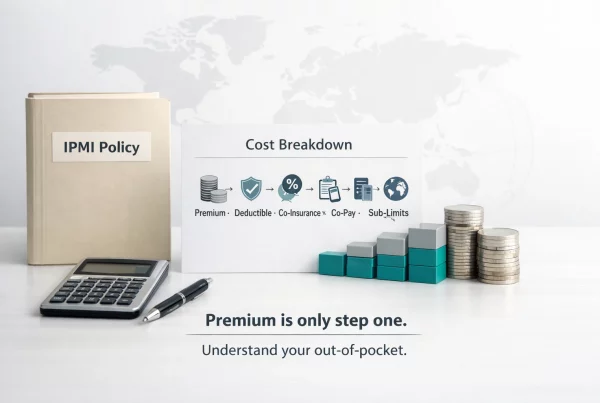



Buying international private medical insurance (IPMI) is rarely just about the first quote. In practice, you are choosing an insurer, a claims process, a provider access model and a renewal relationship that may stay with you for years. That matters even more when you live across borders, move countries, or expect to use care in more than one healthcare system. There is no single “best” insurer for every expat or international family. The right fit depends on where you live, how often you travel, which hospitals you want to use, your medical history, and how comfortable you are with trade-offs between price, underwriting scrutiny, network access and administration. This guide compares major IPMI insurers in 2026 in a neutral, verification-first way. It focuses on strengths, trade-offs and the points you should check carefully before shortlisting a policy: networks and direct billing, claims handling, underwriting, renewals, pricing trends and financial strength. We are not ranking insurers here, and we are not making guarantees. The market changes, insurer structures differ by legal entity and jurisdiction, and some operational details only become clear once you review the current policy wording, provider tools and rating updates.
- There is no universal “best” insurer: the right fit depends on your countries, care usage, underwriting profile and tolerance for renewal increases.
- Network size is only a starting point: what matters is whether your hospitals and treatment types can actually use direct billing where you live.[7][8][9][10]
- Claims experience is partly structural: in-house administration, TPA involvement, escalation routes and pre-authorisation requirements can all affect how straightforward a policy feels in practice.
- Underwriting differences matter both at outset and later: full medical underwriting and moratorium-style approaches can produce very different exclusion outcomes.
- Renewal cost is not just “inflation”: age bands, claims experience, location, product design and medical trend assumptions can all affect premium movements.[5][6]
- Ratings help, but they are not guarantees: always check the rated legal entity, rating date and any recent updates before relying on a headline grade.[1][2][3][4]
- Shortlist carefully: compare insurers using a weighted rubric, then verify the policy wording, direct billing availability, underwriting method and current ratings before you apply.
- Purpose of comparing insurers
- Summary of leading IPMI providers in 2026 (Allianz, Bupa, Cigna, Now Health International, One Health, April International, etc.)
- Networks and direct billing differences
- Claims handling reputation
- Underwriting approaches
- Pricing trends and premium increases
- How to use the scoring rubric
- Bottom line
Purpose of comparing insurers
- Network: the hospitals, clinics and doctors an insurer or its partners work with for eligible treatment.
- Direct billing: the insurer settles eligible bills directly with the provider, rather than asking you to pay first and claim later.
- TPA: third-party administrator; an external company that may handle claims, case management or administration on the insurer’s behalf.
- Pre-authorisation: prior insurer approval for certain treatments, admissions or higher-cost procedures.
- Moratorium vs full medical underwriting: two different ways insurers assess and manage pre-existing conditions.
- Exclusions: conditions, treatments or circumstances the policy will not cover.
- Waiting periods: time-based restrictions before certain benefits become available.
- Sublimits: smaller benefit caps within a wider policy benefit.
- Excess / deductible: the amount you pay yourself before the insurer contributes.
- Coinsurance: the percentage of an eligible claim you still pay after any excess or deductible.
- Reasonable & customary: a pricing benchmark insurers may use when assessing whether charges are in line with local norms.
- Renewal: the annual continuation point when pricing and terms may be reviewed.
- Medical inflation: the year-on-year increase in healthcare costs, driven by utilisation, provider pricing, new treatments and other factors.
Comparing IPMI insurers is not just about who offers more cover on paper. It is about how the insurer operates when you actually need treatment, how it handles pre-existing conditions, how predictable renewals may be, and how comfortable you are with the way it manages provider access and claims.
That is especially relevant for expats. You may live in one country, travel in several others, and want continuity of access even if your family relocates. A policy that looks broad in a brochure can feel very different if your preferred hospitals are not set up for direct billing, or if your exclusions are wider than you expected after underwriting.
It also helps to separate brand recognition from practical fit. A larger global name can bring scale, but scale alone does not answer the questions that matter most at shortlist stage: which legal entity is actually insuring you, how that entity is rated, whether claims are handled in-house or through partners, and how the policy wording defines key terms.
This article is not ranking insurers as “best” and it is not a recommendation. It uses publicly available information at the time of writing and focuses on high-level comparison only. Markets, ratings, networks, outsourcing arrangements and policy wordings can change, so you should verify the latest official documents and current ratings before deciding.
For broader shortlist criteria, see our Refresh/Upgrade context guide: Choosing the Right Insurer for International Health Insurance. The rest of this article applies the same decision framework to major providers in the 2026 market.
Summary of leading IPMI providers in 2026 (Allianz, Bupa, Cigna, Now Health International, One Health, April International, etc.)
The insurers most commonly considered by internationally mobile individuals and families do not all play the same role in the market. Some emphasise broad global reach and brand recognition. Some focus more heavily on digital administration. Others position themselves around premium concierge-style service or flexible regional solutions.
The overview below is deliberately high-level. It should help you understand typical fit, not replace a full review of the current policy wording and operational documentation.
A large global insurance group with a strong international health footprint and a broad partner structure. Often considered by internationally mobile families and corporate-style buyers who value scale and a familiar global brand.[11]
A long-established international health brand often associated with premium positioning, access to private hospitals worldwide and strong member-facing tools. Particularly relevant where customers value premium private care access and straightforward support.
Known for modular plan design, broad geographic reach and flexible structure. Often shortlisted by expats who want optionality around benefits and territorial scope rather than a single rigid package.
Often seen as a digital-first international insurer with a strong online experience and broad stated provider access. Frequently considered by expats who value speed, app-based administration and straightforward global usability.[8]
A more niche, high-touch entrant associated with ultra-premium concierge-style positioning. Relevant mainly for customers seeking bespoke administration and who are comfortable reviewing a newer-market proposition carefully.[12]
Often considered for flexible international solutions across Europe, Asia and other expat corridors, with a broad healthcare partner structure and direct billing arrangements in selected markets.[10]
Updated comparison table
| Insurer | Positioning / typical fit | Network / direct billing notes (high-level) | Claims / admin notes (high-level) | Underwriting approach notes (high-level) | Renewals / pricing notes (high-level) | Financial strength / ratings (with dates) | What to verify |
|---|---|---|---|---|---|---|---|
| Allianz | Often suits globally mobile professionals, executives and families who want a large international insurance group with broad reach. | Uses a broad partner structure in many countries; network breadth is relevant, but direct billing still depends on the provider, country and treatment pathway.[11] | Administration is generally structured and process-led. Practical experience may vary depending on the servicing office or partner arrangement. | Usually associated with full medical underwriting for international medical plans; final exclusions and acceptance terms depend on your application. | Expect normal IPMI renewal dynamics: age-related increases, medical trend pressure and possible product updates. | Allianz SE discloses insurer financial strength ratings including S&P AA (stable, affirmed 11 April 2025) and AM Best A+ (stable, affirmed 28 March 2025).[1] | Confirm the legal entity, servicing office, provider access in your cities, direct billing for your treatment types and any country-specific wording nuances. |
| Bupa Global | Often shortlisted by expats who value premium private care access, strong brand recognition and member-facing service. | In the US, Bupa Global highlights access through Blue Cross Blue Shield networks; outside the US it uses Bupa’s own network arrangements.[7] | Strong digital member tools and a mature service model. Actual claims experience still depends on policy terms, pre-authorisation requirements and local provider set-up. | Typically uses full medical underwriting for international plans, with outcomes varying case by case. | Premiums can move with age bands, market trend and product structure. Review the renewal wording rather than assuming stability from brand alone. | Check the current rating of the specific Bupa underwriting entity relevant to your policy and jurisdiction; do not rely on group branding alone. | Verify which Bupa entity underwrites the contract, whether your hospitals are set up for direct settlement, and whether outpatient or elective treatment pathways require pre-authorisation. |
| Cigna Global | Often suits customers who want modular plan design, broad geography and flexibility across benefit options. | Cigna Global states it has access to a large network with over 2.2 million partnerships worldwide; direct billing will usually depend on provider participation and plan structure.[9] | Strong self-service orientation with app and portal functionality. A good fit for customers comfortable with digital administration. | Commonly uses full medical underwriting, with variation by product and applicant profile. | Review age-banding, annual repricing wording and any regional restrictions carefully. | The Cigna Group investor materials list ratings for key insurance subsidiaries including S&P A, AM Best A, Moody’s A2 and Fitch A+ (June 2025).[2] | Confirm the exact insured entity, applicable network, any territorial restrictions, and how direct billing works for elective outpatient and inpatient treatment in your location. |
| Now Health International | Often attractive to digitally confident expats who value online claims tools, mobile support and broad international usability. | Now Health states access to more than 1 million medical facilities and physicians worldwide; in practice, direct billing still depends on your provider and country.[8] | Often positioned around speed and simplicity, with online claims and member tools central to the experience. | Underwriting can vary by plan and applicant profile. Check whether your application is assessed on a full medical basis or another method. | As with other IPMI providers, premiums can move with age, claims trend, territory and product design. | Sun Life core insurance subsidiaries were affirmed at A+ (Superior) by AM Best on 3 April 2025.[3] | Check which entity or partner supports your region, your hospital’s billing status, and whether any country-specific operational arrangements apply. |
| One Health | A niche option for customers looking for a concierge-style, high-touch service model and willing to assess a newer-market proposition carefully. | Promotes broad provider choice globally rather than a traditional fixed-network model, but the practical operating rules need close review.[12] | Claims and care navigation are positioned as concierge-led, which may appeal to customers wanting high-touch support, but this should be reviewed against the underlying documentation. | Likely to involve careful medical assessment for higher-value bespoke cover; the exact underwriting basis must be confirmed. | Pricing is highly bespoke and should not be compared too simplistically with mainstream IPMI structures. | No equivalent broad public ratings profile was identified in the same way as for larger listed or widely rated insurers; treat this as a point requiring deeper verification. | Verify insurer capacity, legal structure, escalation routes, provider payment mechanics and any restrictions behind the “concierge” positioning. |
| April International | Often relevant for expats seeking flexible international cover and broad partner access, especially across Europe and Asia-related corridors. | April International highlights over 2 million healthcare professionals in 192 countries and direct billing arrangements in selected regions including the US and Asia.[10] | Digital claims and support tools form part of the proposition; operational experience may vary by market and servicing arrangement. | Usually requires underwriting review appropriate to the plan and applicant profile. | Review age-related increases, trend assumptions and any region-specific repricing factors rather than assuming a simple year-on-year pattern. | Covéa Coopérations, relevant to the April group structure, was affirmed at A+ (Superior) by AM Best on 24 February 2026.[4] | Check the specific policy wording, regional servicing arrangement, direct billing partners in your locations and benefit sublimits. |
Ratings are useful context, but they are not a guarantee of future claims outcomes or service quality. They apply to specific legal entities, not to a brand name in the abstract. Dates matter too. Before relying on a rating, confirm which entity underwrites your policy, when that entity was last rated, and whether any outlook or rating action has changed since the quoted date.[1][2][3][4]
Networks and direct billing differences
Network comparisons are easy to oversimplify. A large quoted provider count may sound reassuring, but a number on its own does not tell you whether your preferred hospital will direct bill for the treatment you actually need, in the city where you will use care, under the plan you are considering.
That is why network comparison should be verification-first. For shortlist purposes, ask much more specific questions than “How large is the network?” You need to know whether direct billing is available for inpatient admissions, outpatient specialist treatment, diagnostics, cancer treatment, maternity, mental health and pharmacy in your likely locations.
What the public information suggests
- Allianz emphasises global reach through a broad international partner network, which can support access in many countries.[11] The trade-off is that practical service arrangements may vary depending on which partner or servicing structure applies in your region.
- Bupa Global publicly highlights access to Blue Cross Blue Shield networks in the US and Bupa’s own network outside the US.[7] That is meaningful for members who need US access, but you should still verify whether your chosen hospitals offer direct settlement under your policy.
- Cigna Global states that it has more than 2.2 million provider partnerships worldwide and promotes broad direct billing capability in many cases.[9] In practice, this still needs plan-level and provider-level confirmation.
- Now Health International states access to over 1 million facilities and physicians worldwide.[8] That may make it attractive on paper for internationally mobile members, but you should verify the real network depth in your city rather than relying on the global headline.
- April International highlights over 2 million healthcare professionals in 192 countries and specifically refers to direct billing support through partner arrangements in selected regions such as the US and Asia.[10]
- One Health is positioned less around a classic fixed-network model and more around curated provider choice and concierge coordination.[12] That may appeal to some customers, but it makes verification even more important because operational detail matters more than brochure language.
Search the insurer’s provider tool, then contact two or three target hospitals directly. Ask whether they accept that insurer for direct settlement, for which departments, and whether pre-authorisation is required before treatment.
Direct billing for inpatient treatment does not automatically mean direct billing for outpatient scans, specialist consultations, maternity or mental health treatment. Check the treatment type, not just the hospital name.
A strong network in Dubai, Singapore or London may tell you little about smaller expat cities or future moves. Build your shortlist around the places where you genuinely expect to use treatment.
Trade-offs to watch for
A very broad network can be an advantage, but it may come with more structured pre-authorisation requirements, more formal claims handling, or a stronger steer towards preferred providers. A looser or more concierge-style model may feel flexible, but it can also mean more ambiguity unless you receive clear written confirmation on how providers are paid.
This is one of the main reasons we do not recommend ranking insurers from a distance. The same provider can look strong for one family and unsuitable for another depending on the countries involved, provider preferences and expected treatment use.
- Hospital contracts and provider participation.
- Direct billing arrangements in specific cities or departments.
- TPA or servicing partnerships behind the scenes.
- Provider finder tools and network disclosures.
- Policy wording on pre-authorisation or treatment pathways.
Claims handling reputation
Claims handling is where the insurer becomes real to you. It is also one of the hardest areas to compare cleanly using public information alone, because insurers rarely publish a full, independently comparable claims dataset for individual IPMI plans.
That means you should avoid broad claims such as “fastest” or “most reliable” unless they are supported by official public evidence for the specific product and region. In most cases, the sensible approach is to compare claims administration models, digital tools, escalation clarity and the quality of the public documentation, then verify the rest directly.
What tends to shape claims experience
- Who handles the claim: the insurer itself, a regional office or a TPA.
- How structured the pre-authorisation requirements are: especially for admissions, specialist treatment and higher-cost care.
- How easy it is to submit documents: portal, app, email, document tracking and status visibility.
- How clear the wording is: definitions around exclusions, reasonable and customary charges, chronic care and outpatient limits.
- How escalation works: whether you know where to go if a claim is delayed or disputed.
High-level market observations
Large established insurers such as Allianz, Bupa Global and Cigna Global tend to offer mature claims structures and member tools. That can be helpful if you want a process-led environment, but it can also mean more formal administration and more steps around approvals and supporting documentation.
Digitally oriented providers such as Now Health International often appeal to customers who value online claims and app-based tracking. That can make routine administration easier, but it is still worth checking how the insurer handles more complex cases, larger inpatient claims or disputes requiring escalation.
Concierge-positioned providers such as One Health may promise a more guided experience, but the real question is whether the concierge model is clearly documented and operationally robust. You should ask who handles payment disputes, how emergency admissions are managed, and what happens if the preferred provider route is unavailable.
Ask each shortlisted insurer or broker the same questions: are claims handled in-house or through third parties? What is the escalation route if a claim is delayed? Which treatments require pre-authorisation? How do you submit supporting documentation? Which policy definitions most often affect claim outcomes? A consistent set of questions will tell you more than generic marketing language.
What to look for in public-facing materials
- Does the insurer publish clear member guidance on direct billing, reimbursement claims and pre-authorisation?
- Is the digital member experience strong enough for your needs, or would you prefer higher-touch support?
- Is there clarity on whether regional servicing is centralised or outsourced?
- Are policy definitions and exclusions easy to understand before purchase?
In other words, “claims reputation” should be read as a combination of structure, transparency and escalation readiness. It is not just about speed. A policy that settles straightforward claims quickly but creates confusion around exclusions or network use can still be frustrating in practice.
Underwriting approaches
Underwriting is one of the most important comparison points because it shapes what the policy may exclude from day one and how clearly that position is documented. Two policies with similar headline benefits can lead to very different real-world cover depending on how the insurer assesses your medical history.
Broadly, international medical insurers usually rely on full medical underwriting, moratorium-style underwriting, or a plan-specific variation of those methods. The right approach for you depends on your medical history, your need for certainty and how much ambiguity you are prepared to accept at the outset.
Full medical underwriting
Full medical underwriting usually involves a more detailed health disclosure process at application stage. The main advantage is clarity: you can often see more explicitly what the insurer has accepted, loaded, postponed or excluded. That can be helpful if you value certainty and want fewer grey areas later.
The trade-off is that the application can be more detailed, and the insurer may apply exclusions, premium loadings or other terms based on your disclosed history. Many mainstream IPMI providers use this approach for international medical plans.
Moratorium-style underwriting
Moratorium-style underwriting can feel simpler at application stage because it may rely less on full upfront medical disclosure. The trade-off is that it can create more interpretation later if a claim relates to symptoms, investigations or treatment that may be linked to earlier medical history.
For some applicants this can be acceptable. For others, especially where there is known medical history, full medical underwriting may offer more certainty even if the initial process is more demanding.
We explain these methods in more detail in How underwriting works in international health insurance (IPMI). That guide is worth reading before you compare final quotes, because the underwriting method can matter just as much as the headline benefits.
Questions that matter more than the label
- Exactly which underwriting method will be used for your application?
- Will you receive a clear endorsement or exclusion schedule if the insurer applies exclusions?
- How does the policy define a pre-existing condition?
- Are chronic conditions, maintenance medication or follow-up investigations treated differently?
- What waiting periods apply for maternity, dental, mental health or preventive care?
This is another area where the “best insurer” question is not the right one. Some applicants will prefer a stricter but clearer underwriting outcome. Others may prioritise simplicity at outset and accept more interpretation risk later. The right answer depends on your circumstances.
Pricing trends and premium increases
Pricing comparisons in IPMI can become misleading very quickly if they focus only on the first-year premium. A lower initial quote does not automatically mean better value if the network is weaker in your key locations, the underwriting outcome is less suitable for your history, or the renewal path is more volatile than you expected.
For 2026, the broad market context still points to elevated medical trend pressure. WTW projected a global medical trend of 10.3% for 2026, while Aon projected 9.8% globally.[5][6] These figures are not your premium increase, but they do help explain why insurers continue to reprice health cover upwards across many markets.
What drives premium increases
Provider pricing, drug costs, diagnostics, specialist utilisation and treatment intensity all feed into insurer claims costs. Global medical trend remains materially above general inflation in many markets.[5][6]
Many international policies step up at age thresholds. Even if the insurer’s trend assumptions remain stable, moving into a higher age band can produce a noticeable increase at renewal.
While individual IPMI pricing is not always adjusted in a simple one-to-one way to your own claims, portfolio performance, risk pool experience and product design still influence renewals.
The area of cover, especially if it includes high-cost markets, can materially affect the premium. So can your chosen level of access to expensive private hospital systems.
What not to assume
- Do not assume premium increases will match the published global medical trend.
- Do not assume the insurer with the highest initial premium will be the most expensive over time.
- Do not assume a lower-cost insurer necessarily provides weaker cover; sometimes the difference lies in underwriting, geography or product design.
- Do not assume renewal behaviour is identical across all policies under the same brand.
A more useful question is: what is driving this quote, and how likely is that logic to remain acceptable for me at renewal? That means asking whether the premium reflects broad network access, lower deductibles, richer outpatient cover, lighter benefit restrictions, high-cost territories or a different underwriting outcome.
How to think about renewals
In practical terms, you should expect IPMI premiums to change over time. Medical trend pressure remains real in 2026, and age-related increases are built into many international plans.[5][6] What matters is not eliminating increases altogether, but understanding how the insurer describes renewal mechanics, how changes are communicated, and how much flexibility you have if you need to adjust cover later.
Compare like with like. Match the area of cover, deductible, benefit scope, underwriting basis and family composition before drawing conclusions about price. Otherwise, you may be comparing materially different products and misreading the trade-off.
- Medical inflation assumptions and regional claims trends.
- Age-band movement for insured members.
- Benefit structures or product redesigns.
- Country loadings or territorial pricing factors.
- Renewal notices, policy wording updates and claims administration processes.
How to use the scoring rubric
A weighted scoring rubric is often the clearest way to compare IPMI insurers without turning the exercise into a simplistic ranking. The point is not to produce a universal winner. The point is to reflect your own priorities clearly and see how the shortlist changes when your weightings change.
Use the table below as a weighting framework. Give each criterion a weight from 0 to 5, where 0 means “not important to me” and 5 means “critical”. Then score each insurer separately against the same criteria using your own evidence and verification findings.
| Criterion | Why it matters | Your weight (0–5) |
|---|---|---|
| Claims experience | How comfortable you are with the insurer’s claims structure, document flow and escalation route. | 0–5 |
| Network / direct billing | Whether your hospitals and treatment pathways can use the insurer operationally, not just in theory. | 0–5 |
| Underwriting transparency | How clearly pre-existing conditions, exclusions and acceptance terms are documented. | 0–5 |
| Portability | How well the policy may continue to fit if you move countries or your treatment pattern changes. | 0–5 |
| Renewal stability approach | How understandable the renewal mechanics are and how comfortable you are with the pricing structure. | 0–5 |
| Service model | Whether you prefer digital self-service, traditional administration or higher-touch concierge support. | 0–5 |
| Digital / member experience | Portal usability, app quality, claims upload tools and visibility of documentation. | 0–5 |
| Compliance / data handling approach | How comfortable you are with the insurer’s data flows, documentation clarity and jurisdictional structure. | 0–5 |
| Financial strength | Your level of comfort with the rated entity and the overall insurer stability picture. | 0–5 |
| Exclusions clarity | How easy it is to understand what is and is not covered before relying on the policy. | 0–5 |
Worked example 1: family with planned moves
A family expecting to move across several countries over the next few years may care most about portability, hospital access, direct billing and a service model that remains manageable during relocation.
| Criterion | Illustrative weight |
|---|---|
| Claims experience | 4 |
| Network / direct billing | 5 |
| Underwriting transparency | 4 |
| Portability | 5 |
| Renewal stability approach | 4 |
| Service model | 3 |
| Digital / member experience | 3 |
| Compliance / data handling approach | 2 |
| Financial strength | 4 |
| Exclusions clarity | 5 |
Under this profile, an insurer with stronger geographic flexibility and clearer underwriting may score better than one with a lower starting premium but weaker portability or less transparent exclusions. That does not make it the “best” insurer overall. It only suggests that it may fit this family’s priorities more closely.
Worked example 2: single-country expat with frequent outpatient use
A single-country expat who expects regular outpatient consultations, diagnostics or specialist follow-up may place more weight on local network usability, practical direct billing and digital claims tools than on portability.
| Criterion | Illustrative weight |
|---|---|
| Claims experience | 4 |
| Network / direct billing | 5 |
| Underwriting transparency | 4 |
| Portability | 1 |
| Renewal stability approach | 4 |
| Service model | 2 |
| Digital / member experience | 5 |
| Compliance / data handling approach | 2 |
| Financial strength | 4 |
| Exclusions clarity | 4 |
Under this profile, a digitally stronger insurer with good local outpatient administration may rise in your scoring, even if another insurer looks stronger for global relocations. Again, the score is illustrative and sensitivity-based. It is not a ranking.
After assigning weightings, score each shortlisted insurer on the same 0–5 basis using only evidence you can verify: current wording, direct billing confirmation, ratings information, member tools, and documented answers from the insurer or broker. Multiply score by weight, compare totals, then test how the result changes if you increase or reduce one or two criteria. That sensitivity check is often more useful than the first total.
How to shortlist insurers safely
- Match the same area of cover, deductible structure and benefit scope before comparing quotations.
- Confirm the exact underwriting method that will apply to your application.
- Check direct billing availability in your countries, cities and likely treatment pathways.
- Ask who handles claims: the insurer itself, a regional office or a TPA.
- Read the definitions for pre-existing conditions, waiting periods, exclusions and reasonable and customary charges.
- Review sublimits for maternity, mental health, chronic medication, medical evacuation and specialist outpatient treatment.
- Verify the rated legal entity and the most recent published rating date.
- Ask how renewal changes are communicated and whether the policy wording may change from year to year.
- Keep screenshots, emails or written confirmations for any provider or billing assurances you are relying on.
Bottom line
The right way to compare top IPMI insurers in 2026 is not to look for a universal winner. It is to understand how each insurer’s structure may fit your countries, hospitals, medical profile and tolerance for trade-offs.
Allianz, Bupa Global, Cigna Global, Now Health International, One Health and April International can all make sense in the right context. Their differences tend to show up not only in headline benefits, but also in the practical details: how provider access works in your actual cities, how underwriting is handled, how claims are administered, how renewals feel over time, and how clearly the insurer documents the limits of cover.
That is why the most useful comparison is a neutral one. Use the table, use the rubric, and then verify everything that matters for your shortlist. A policy can only be judged properly once you have matched it to your real-world needs rather than to a generic list of “top providers”.
If you want to compare options for your own circumstances, start with our Individual & Families page and then request tailored quotations through our Quote form.
For further reading, we recommend: Choosing the Right Insurer for International Health Insurance as Refresh/Upgrade context, and How underwriting works in international health insurance (IPMI) before you compare final applications.
Points to verify
- The exact underwriting method used for your application: full medical underwriting, moratorium-style underwriting, or another plan-specific variation.
- Network access and direct billing availability in your countries, cities and treatment types: especially inpatient admissions, specialist outpatient treatment, diagnostics, maternity and mental health.
- Whether claims are handled in-house or via third parties, and how escalation works: only rely on what can be verified for your policy and region.
- Benefit limits and sublimits for key categories: maternity, mental health, chronic medication, cancer treatment, medical evacuation and preventive cover.
- Renewal mechanics and how changes are communicated: age bands, repricing approach, wording updates and notice periods.
- Current financial strength ratings and any recent changes or press releases: check the specific underwriting entity and the date.
- Policy wording definitions: pre-existing condition, waiting periods, exclusions, reasonable and customary charges, chronic condition definitions and coinsurance wording.